Labour Hire
Construction: Definition, Phases & Future
Construction: Definition, Phases & Future
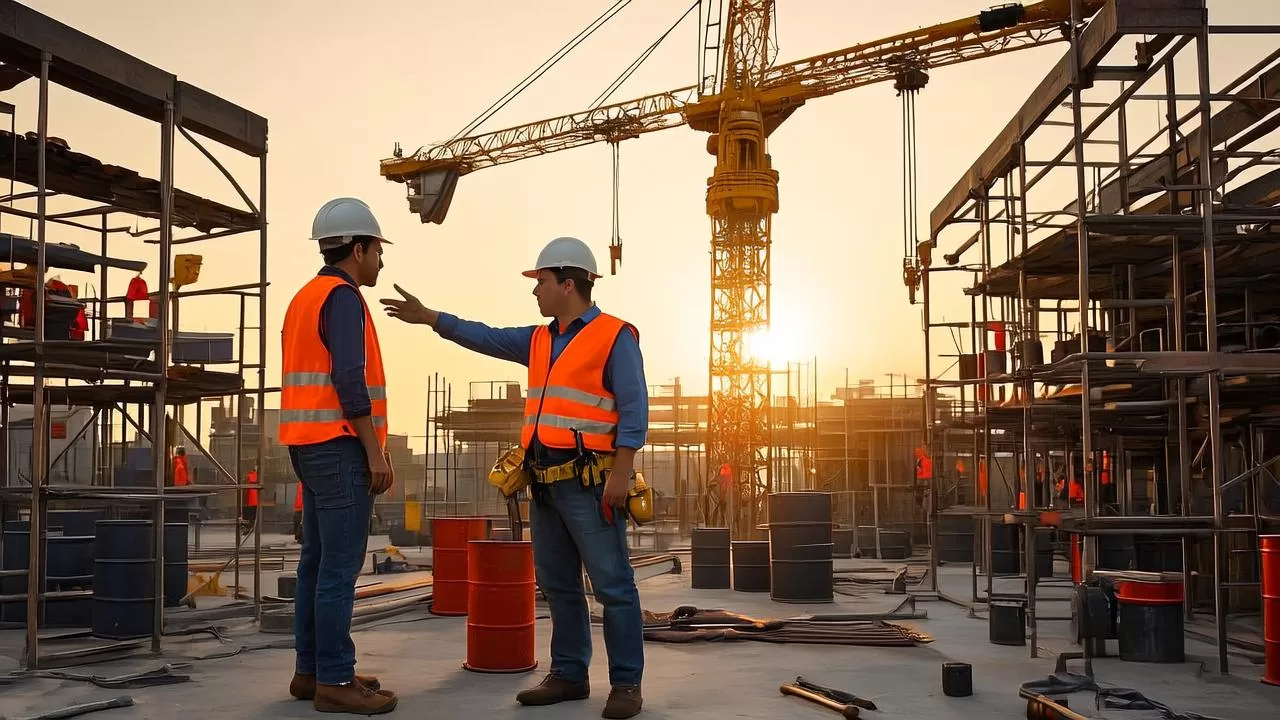
Construction is the organised process of planning, designing, building, maintaining and, when assets reach end‑of‑life, safely demolishing structures and infrastructure. Covering everything from family homes to billion‑dollar rail links, the building industry sustains 1.1 million Aussie workers and generates more than $520 billion in annual revenue—making it one of the nation’s biggest economic engines.
Definition & Scope
At its core, construction is the practical realisation of architectural and engineering intent. It spans three ANZSIC divisions—building construction, heavy and civil engineering, and specialised trade services—plus a web of consultants, manufacturers and tech suppliers. Key deliverables include:
- Buildings – residential, commercial, industrial and institutional facilities.
- Infrastructure projects – roads, rail, bridges, ports, utilities and renewable‑energy assets.
- Industrial facilities – mines, refineries and processing plants.
This breadth means the sector touches 7 % of Australia’s GDP (ABS, 2025) while shaping the liveability of every community across the country.
Lifecycle Phases
1. Feasibility & Planning
Clients test site viability, finance options and demand forecasts. Early engagement with planners and quantity surveyors keeps budgets realistic.
2. Design Development
Architects, engineers and certifiers translate concept into buildable documentation, aligning with the National Construction Code (NCC) for safety, sustainability and accessibility.
3. Procurement & Contracting
Head contractors tender the works, assemble subcontractors and source materials—often leveraging modern methods like off‑site manufacturing to cut waste.
4. Construction Execution
Site management coordinates labour, plant and logistics while monitoring WHS compliance and quality assurance.
5. Commissioning & Handover
Systems are tested, documentation is finalised and occupants trained before practical completion.
6. Operation, Maintenance & Demolition
Asset managers maintain performance until refurbishment or safe demolition returns the site to the land bank.
Project Types
Residential
From detached houses to high‑rise apartments, residential construction remains cyclical—impacted by interest rates and migration patterns.
Commercial & Institutional
Offices, retail centres, hospitals and schools rely on compliant fire‑safety and accessibility designs to meet NCC performance requirements.
Industrial & Infrastructure
Critical heavy‑civil works—road upgrades, rail corridors, power transmission and water treatment—often dominate public‑sector budgets thanks to nation‑building programs.
Regulation & Standards
The National Construction Code (NCC) sets minimum safety, health, amenity, energy‑efficiency and sustainability benchmarks for buildings nationwide. The 2025 update strengthens:
- Condensation control and waterproofing
- Structural performance solutions
- Energy‑efficiency provisions to support electrification and EV charging
State and territory WHS Acts embed Safe Work Australia model laws, while planning approvals run under each jurisdiction’s Planning Act.
[caption id="attachment_4888" align="aligncenter" width="1280"] construction definition[/caption]
Industry Size & Key Players
IBISWorld values 2025 division revenue at $521.2 billion with more than 411 000 active businesses. The top three contractors—CIMIC, Downer and John Holland—collectively command ≈15 % market share. :contentReference
Below the tier‑one giants sit thousands of SMEs and sole‑trader subcontractors who deliver specialist trade services. Digital platforms like Yakka Labour now connect builders with vetted on‑demand tradies, streamlining workforce supply across the country.
Workforce & Mental‑Health Risks
Construction attracts a high‑risk demographic: physically demanding roles, transient project sites and long hours. Safe Work Australia reports 3.5 % of workers suffered an injury or illness in 2021‑22, with musculoskeletal strains dominating claims (Safe Work Australia, 2024). :contentReference[oaicite:8]{index=8}
Mental health remains a critical issue—research shows suicide rates among young male construction workers are more than twice the national average (MATES in Construction, 2024). :contentReference[oaicite:9]{index=9} Industry programs like MATES and “Fly the Flag” focus on peer support, while upcoming NCC amendments push psychosocial‑risk management into design and procurement scopes.
Emerging Trends & Technologies
- Modern Methods of Construction (MMC) – off‑site modular fabrication cuts waste and speeds delivery.
- Building Information Modelling (BIM) & Digital Twins – real‑time data improves site management and asset maintenance.
- Low‑Carbon Materials – geopolymer concrete and mass‑timber help meet net‑zero targets.
- Robotics & AI – drones for progress tracking, autonomous plant and AI‑driven scheduling fight the labour crunch.
- Blockchain records – immutable quality and safety logs strengthen supply‑chain transparency.
The NCC’s 2025 performance‑based approach encourages innovation, allowing performance solutions that harness these new technologies while still demonstrating compliance. :contentReference
Career Opportunities
With strong migration‑driven housing demand plus record infrastructure pipelines, the career outlook for construction professionals is bright:
- Site Management & Supervision – high demand for forepersons and site managers with digital‑tool proficiency.
- Quantity Surveying & Cost Engineering – cost‑control expertise is critical amid material‑price volatility.
- Sustainability & Energy Modelling – new NCC efficiency rules create roles in building physics and green‑star certification.
- Skilled Trades – carpenters, electricians and plumbers remain essential; government apprentice incentives target 40 000 new trainees a year (Master Builders AU, 2025). :contentReference
Frequently Asked Questions
What is construction?
Construction is the end‑to‑end process of planning, building, maintaining and eventually demolishing structures and infrastructure.
How big is Australia’s construction industry in 2025?
IBISWorld estimates revenue at $521 billion and employment at 1.1 million people in 2025.
What are the main phases of a construction project?
Feasibility, design, procurement, on‑site construction, commissioning, and operation & maintenance.
Which code regulates building safety?
The National Construction Code (NCC) sets the minimum safety, health, amenity and sustainability standards for all Australian buildings.
Is construction a good career in 2025?
Yes—government data shows steady demand for skilled trades, site managers and sustainability specialists due to housing and infrastructure pipelines.
What mental‑health support exists for tradies?
Programs like MATES in Construction and Safe Work Australia’s psychosocial‑hazard guidelines provide peer support, training and counselling services.
How is technology changing construction?
BIM, drones, robotics and AI scheduling boost productivity, while low‑carbon materials and modular methods cut emissions and waste.
Where can I find building approvals data?
Monthly building approvals are published free on the Australian Bureau of Statistics website.
Last updated: July 2025
Official sources
Award rates, licences and safety rules change. Check the official source before you hire or take on a shift.
- Safe Work AustraliaNational work health and safety framework, including high-risk work licences
- Australian Bureau of Statistics — labourEmployment, wages and industry statistics